
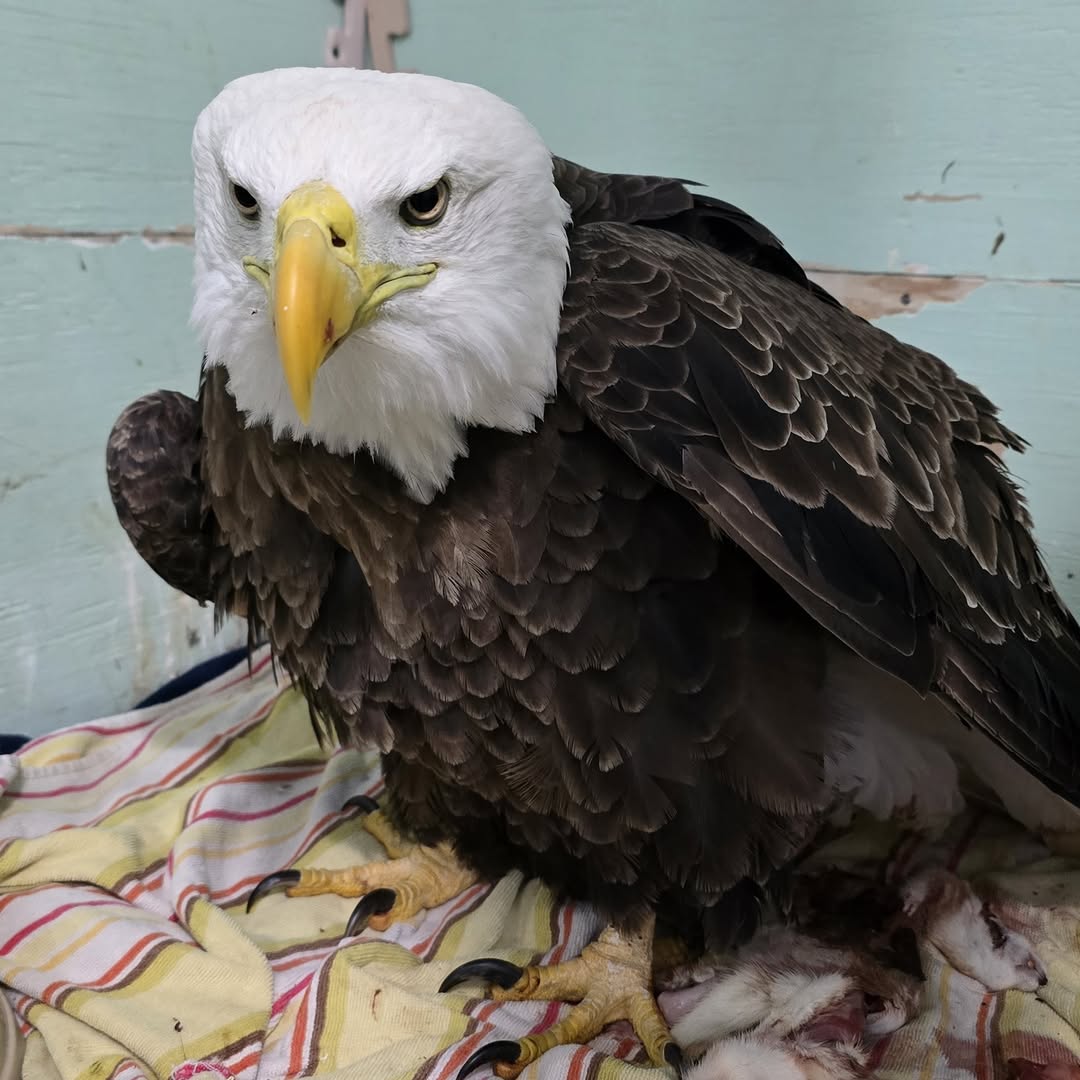

A bald eagle rescued in Clay County is continuing a long and challenging recovery, capturing the attention of residents across the region. The eagle, affectionately named “Clay,” was found injured in a roadside ditch near a known nesting area and brought into care with multiple fractures in the right wing and dangerously high levels of lead poisoning.
Veterinary teams quickly intervened, surgically repairing the wing and beginning intensive treatment for lead toxicity. Initial blood tests showed extremely elevated lead levels, requiring multiple rounds of chelation therapy to help remove the toxin from the bird’s system. While progress has been gradual, recent updates indicate improvement, with lead levels steadily decreasing and the eagle regaining some strength and weight.
Clay has undergone a range of treatments, including hydrotherapy, laser therapy, and careful rehabilitation exercises aimed at restoring movement to the injured wing. Caregivers recently moved the eagle into a larger enclosure to encourage activity, though a setback occurred when the bird fell and aggravated the injury. Despite this, staff remain cautiously optimistic.
“Recovery from injuries like this is a long road,” one caregiver noted, emphasizing the importance of minimizing stress as Clay continues to experience occasional head tremors associated with lead exposure.
The community has played a key role in the eagle’s care. Donations, including culled trout from a state fish hatchery, have helped ensure the bird receives proper nutrition during recovery.
While Clay still faces a lengthy healing process, the progress made so far has given hope to those following the story. Wildlife officials say continued monitoring and treatment will be critical in determining whether the eagle can eventually return to the wild.
For now, Clay remains in rehabilitation, a symbol of both the challenges facing wildlife and the collective effort to give injured animals a second chance.
ABOUT THE AUTHOR
